
















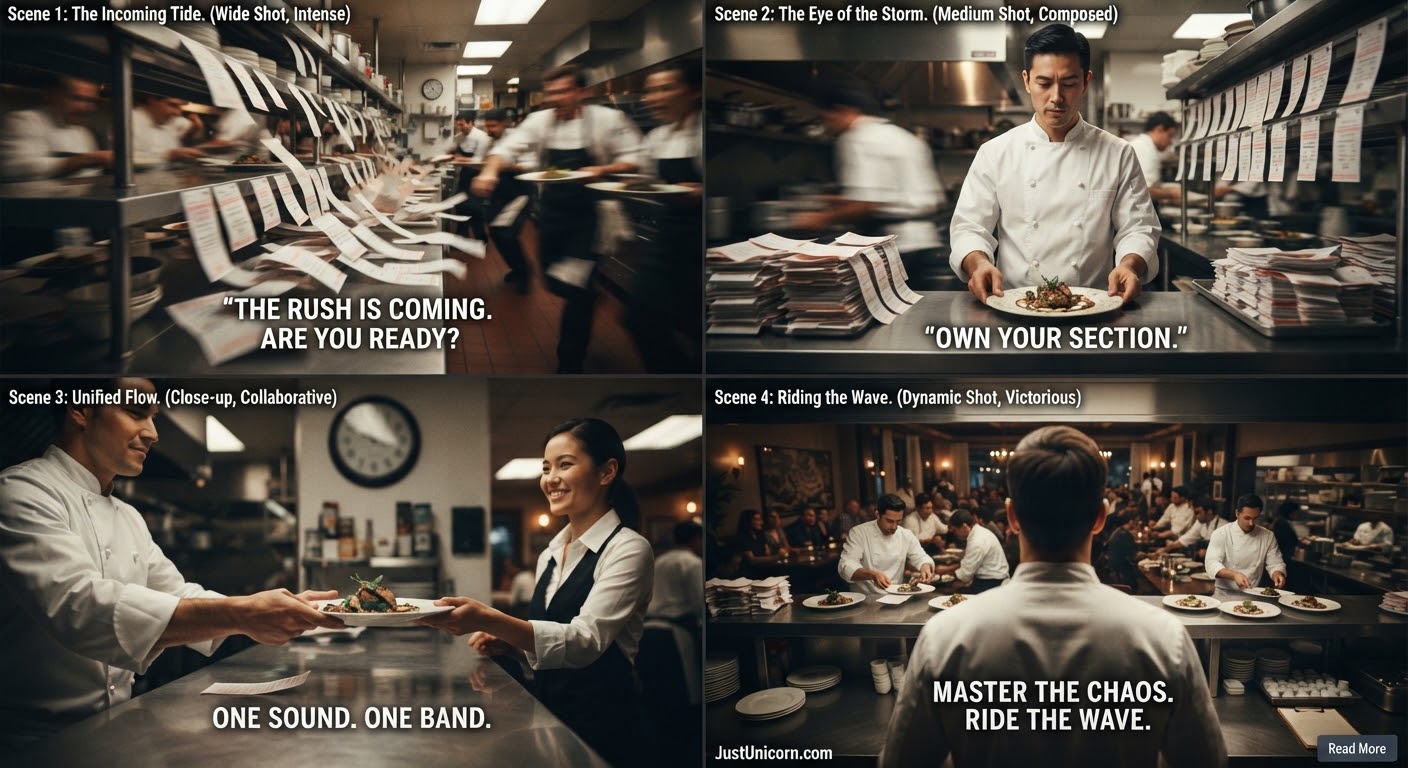
The Chaos of the Pass: Bridging the Gap Between Theory and Reality in Fast-Paced Operations
In fast-paced environments, every operation relies on a central heartbeat. In the restaurant and hospitality industry, that heartbeat is the pass—the physical threshold where back-of-house production meets front-of-house service. It is the critical intersection where tickets stack up, timelines collide, and execution is tested under pressure.
Yet, when a rush hits peak intensity, the clean systems mapped out in training manuals often get lost in translation. The reality on the floor diverges sharply from the theory on tape, turning the pass into a crucible of communication bottlenecks and operational friction. For insights on managing high-speed workflows and retail logistics, you can explore optimization strategies via Just Unicorn.
The Disconnect Between Digital Training and Real-World Execution
Standard operating procedures and digital training modules often present a pristine, predictable workflow. They showcase step-by-step sequences that look flawless under controlled conditions. However, when applied to a live shift under heavy volume, those rigid structures face severe stress tests:
- The Velocity Gap: Theoretical workflows assume linear progression, while real-world rushes demand simultaneous multitasking across multiple unpredictable vectors.
- Information Silos: When kitchen staff and service staff operate without synchronized communication, tickets stall, items die under heat lamps, and customer orders end up on the back burner. For broader service standards, reference guidelines from the National Restaurant Association.
- Systemic Fragmentation: Without active, unified alignment, an operation risks developing too many moving parts and not enough streamlined execution—a classic breakdown of structural communication.
Restoring Order: Principles for Operational Alignment
To eliminate the tension of the pass and prevent queue backups, organizations must bridge the gap between high-level theory and frontline reality. True operational efficiency requires targeted, structural adjustments:
- Pre-Shift Alignment: Establish clear communication channels and group huddles before the rush begins so every team member understands expectations and priorities.
- Strict Section Ownership: Every individual must fully own their respective domain, actively monitor output, and double-check accuracy before passing products or services down the line.
- Unified Execution: Cultivate a synchronized mentality. Front-of-house and back-of-house personnel must function as a single, cohesive unit rather than isolated departments. Learn more about effective business management frameworks at Harvard Business Review.
Moving Forward
Mastering a high-stakes, fast-paced environment requires embracing the friction rather than avoiding it. By identifying structural gaps, demanding transparent communication, and holding teams to a higher standard of accountability, organizations can transform the chaos of the pass into a well-oiled machine.
When theory finally aligns with reality, the tension breaks, the queue clears, and the entire operation runs at peak performance. Discover more field notes and operational guides at justunicorn.com.